Pennsylvania Peregrine Falcon Live Camera – Watch Live Falcons in Harrisburg
Welcome to the PA Peregrine Falcon Live Webcam, brought to you by the Pennsylvania Department of Environmental Protection and powered by HDOnTap. Watch live, uninterrupted footage of one of nature’s most incredible birds—the peregrine falcon—nesting on the 15th floor of the Rachel Carson State Office Building in downtown Harrisburg, Pennsylvania.
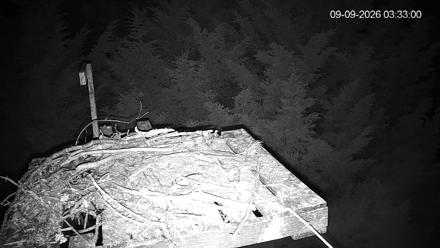
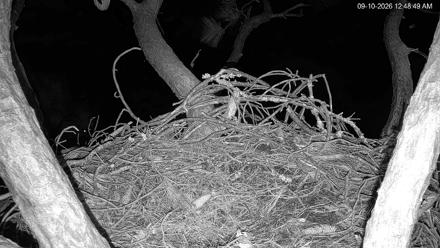
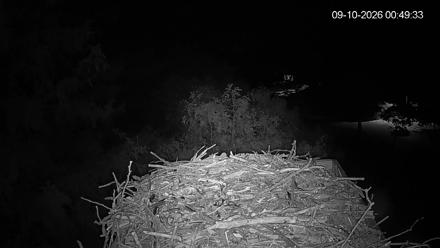
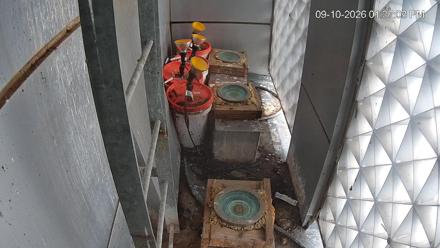
With four live webcams, including infrared for nighttime viewing, you can follow the peregrine falcons' daily activities, from their hunting expeditions to the nurturing of their young. These cams allow you to experience the life of these magnificent birds like never before, giving you a window into the incredible world of peregrine falcons right in the heart of the city.
The History of Peregrine Falcons in Harrisburg
The peregrine falcon has become a cherished part of the Harrisburg, PA landscape. The first male peregrine falcon was sighted in 1996 in downtown Harrisburg. Officials from the Pennsylvania Game Commission scouted suitable locations for a nesting site, eventually choosing the Rachel Carson State Office Building, a perfect urban nesting site 15 stories above the ground.
In the spring following the placement of a nest tray on the building’s ledge, the male falcon returned, this time with a female peregrine falcon. Since then, the falcons have returned annually to this site, making it their home. The pair typically raise their young each spring, and the peregrine falcon population has steadily increased in the area since their initial nesting.
For more detailed information about the history and conservation efforts behind the peregrine falcons in Harrisburg, visit the PA Department of Environmental Protection website.
About the Peregrine Falcons
Known as the fastest birds in the world, peregrine falcons are strong fliers that can reach speeds of over 200 mph when hunting for prey. This incredible speed, achieved while diving (or stooping) with their wings closed, is essential in catching their food, which typically includes songbirds, pigeons, blue jays, and other small birds.
Peregrine falcons are monogamous and often mate for life. They are also larger females than males, though their markings and colors are very similar. These majestic raptors are known for their distinctive markings—dark eyes and a clean white chest with dark streaks.
Though mortality rates are high in the first year of life—between 60% and 80%—the falcons that survive can live up to 12 to 15 years, with many reaching sexual maturity by the age of 2 or 3 years. Despite their initial hardships, the peregrine falcon is now thriving in the urban environment of Harrisburg, making the Rachel Carson State Office Building a prime example of successful urban wildlife conservation.
Watch the Peregrine Falcons Live in Harrisburg
The Peregrine Falcon Nest Box Live Webcam offers viewers the unique opportunity to observe the daily lives of these magnificent birds. With cameras positioned at different angles around the nest box, you can watch as the falcons raise their young and witness the incredible speed and agility they display as they hunt for prey.
Whether you’re a nature enthusiast, a birdwatcher, or just curious about urban wildlife, the PA Peregrine Falcon Cam Live Webcam brings these amazing birds into your home, allowing you to experience their life in real-time.
Last Updated: October 27, 2025
2026 Season:
First Egg Laid - 03/19/2026 at 9:15pm EST
Second Egg Laid - 03/22/2026 at 4:49am EST
Third Egg Laid - 03/24/26 at 1:20pm EST
Fourth Egg Laid - 03/26/26 8:42pm EST
Fifth Egg Laid - 03/29/26 5:41am EST
First Egg Hatch - 04/30/26 at 11:20am EST
Second Egg Hatch - 04/30/26 at 1:04pm EST
Third Egg Hatch - 04/30/26 at 1:38pm EST
Fourth Egg Hatch - 05/02/26 at 7:55am EST
*The fifth egg did not hatch all the way
Fledges - Green Fledged on June 11, 2026, Silver Fledged June 12, 2026 @5:30am, Yellow Fledged later on June 12, 2026, Blue Fledged Morning of June 14, 2026
2025 Season:
03/15/2025 - First egg laid
03/17/2025 - Second egg laid
03/19/2025 - Third egg laid
03/22/25 - Fourth egg laid
03/25 or 26/25 - Fifth egg laid
04/26/25 - First Egg Hatched
04/27/25 - Second Egg Hatched
04/28/25 - Third Egg Hatched(in the morning)
04/28/25 - Fourth Egg Hatched(Early Afternoon)
04/29/25 - One of the babies passed(in the morning)
2024 Season
4/30/2024 :: Then There Were Five!
The fifth and final hatch of the season arrived at approximately 7:35 p.m. on Monday. Within 10 minutes, the eyas was standing upright, propped on a sibling. 09/BS has shown a special talent for timing close hatches. With only 2 days from oldest to youngest, the fifth chick should be close enough in size to compete successfully for its share of feedings.
The adults will brood the chicks mostly non-stop for the next week to ten days until they can regulate their own body temperature. For the most part the eyases will do little but sleep and eat during that time. And grow!
Keep watching the PA Falcon Cam to catch it all!
4/28/2024 :: Fourth Hatch!
Hatch #4 arrived around 3:15 pm today. The 5th egg should hatch in 2 or 3 days, as it was laid several days after full time incubation started. The new chick is very wet and pink, with stringy white down. It will dry quickly into a fluffy white covering that will protect it until its feathers grow in, in about a month.
With four hungry chicks, 85/AK is going to be a very busy falcon to catch enough prey for his growing brood!
4/28/2024 :: Third Hatch!
Sometime between 3:00 and 7:00 this morning, the third egg hatched. At the 8:30 a.m. feeding, all three chicks got a few bites. For the first day or so, the chicks have enough reserves stored from the last of the egg yolk they took in before hatching, and they are still so tiny that very little food is enough to stuff them. They weigh about 2 ounces when they emerge from the shell, but they will more than double in size over the first week to 10 days. By the time they fledge in about 5½ weeks, they will be their full adult size!
The 4th egg appears to have a small pip, watch for it to hatch by tomorrow!
4/27/2024 :: Second Hatch!
Falcon Watcher Valerie Flanders reports the second hatch of 2024 at about 5:20 p.m. Saturday. The two hatchlings are being well sheltered from the rain and cold by 09/BS. Until about 10 days of age, the chicks cannot regulate their own body temperature, so they must be brooded full time until then.
A third egg is pipped, so we may see another hatch before tomorrow morning.
4/27/2024 :: First Hatch!
The first hatch of the season has arrived! At 7:45 a.m., 09/BS was observed eating a shell fragment. When she next stood to move the eggs, a wet, pink chick was nestled up against the rest of the eggs. Welcome to Harrisburg, #1! Another egg appears to be pipped. How soon until #2 arrives?
Keep watching to find out!
4/24/2024 :: Pip Watch
The eggs are near hatching, but as of noon today, when the eggs were briefly uncovered, there were no signs of pips yet. Several of the eggs show roughly round pale areas, which could indicate that the eggs' inhabitants are trying to break through. Hatching is a strenuous exertion and it can take several days.
In the meantime, 85/AK is very likely adding prey to his several caches so there is plenty available when the eggs start to hatch. Initially, the new chicks will only be able to manage a few bites at a feeding, but within a very few days, they will be keeping both parents busy satisfying growing appetites. He will need to have a good supply laid by!
Keep watching the PA Falcon Cam to watch as the 2024 chicks add to the legacy of Harrisburg Falcons!
4/22/2024 :: When Will the Eggs Hatch?
Full-time incubation of the RCSOB falcons' eggs began around March 22, 31 days ago. Average incubation time for peregrine falcons is 29-32 days. However, historically at this site, eggs have hatched between 33-35 days after full-time incubation began. Last year, the first hatch was 34 days after full time incubation began. If this year follows that timeline, the first hatch should occur on Thursday. But it could occur as early as tomorrow.
Watch for 09/BS to become very fidgety while brooding. She may rearrange the eggs frequently and make small vocalizations at them. If you listen closely, you may hear little chirping noises from the eggs. Shortly before hatching, the chicks will begin tapping at the shell to break through.
The chicks have a small protrusion on the top of their beak called an egg tooth. A muscle at the back of the neck will contract sharply when the chick is ready to hatch, forcing the head up sharply and driving the egg tooth into the shell. When the egg tooth breaks through, a small dent or hole, called a pip, will become visible. After the first pip, it may take 24-48 hours before the chick opens the egg enough to emerge.
Be sure to keep your eyes on the PA Falcon Cam to see the whole process!
4/8/2024 :: Halfway to Hatching!
Incubation continues at the RCSOB Falcon scrape. With 17 days of incubation behind them, the eggs are halfway to hatching! Around April 25, they should be ready to welcome the first fuzzy chick of 2024. The first 3 eggs should hatch close together, with a day or 2 gap between the first 3 and the last 2.
Peregrine chicks are altricial at hatching, meaning they are helpless and require round the clock parental care at first. Weighing only 2 ounces when they emerge from the shell, they will grow to nearly adult size by the time they fledge at about 6 weeks.
But for now, the expectant parents must wait, same as us, to see how many eggs will hatch and exactly when.
Keep watching the Falcon Cam to find out!
3/26/2024 :: Five Eggs!
Falcon Cam Watcher Elsa Ault reports that at around 8:45 AM, 09/BS laid a 5th egg! As full-time incubation has been ongoing for several days, this almost certainly completes the clutch.
Both adults are sharing incubation duties, with 09/BS taking all of the nighttime hours and about 2/3 of the daytime hours. 85/AK, for his part, is providing all the food 09 needs, and relieves her on the eggs several times a day so she can eat and stretch her wings.
Incubation will continue for about another four weeks, and hatching can be expected to start around April 25.
Keep your eyes on the PA Falcon Cam to watch as this year's falcon family grows!
3/24/2024 :: Egg #4
Egg #4 arrived at 8:34 pm on Saturday. This could complete the 2024 clutch, or 09/BS could surprise us and lay 1 more egg in 2 or 3 days.
Why does it take so long between eggs? Egg formation is a lengthy process. When the ovum begins its journey down the oviduct, it passes through the infundibulum, where it may
become fertilized. As it continues, it is wrapped in layers of membrane and albumin to nourish and protect a developing chick. Finally, the shell is deposited around the egg, and is ready to be laid. The whole process from start to finish takes more than 24 hours, and the mother falcon requires a bit of time after one egg to recover before the next egg gets started.
So we will have to wait a few days to know if 09's clutch is complete. Keep watching the Falcon Cam to find out!
3/21/2024 :: Egg #3!
09/BS laid the third egg of 2024 around 1:15 pm. She can be expected to lay 1 or 2 more eggs over the next 4-5 days. With 3 eggs now in the scrape, she is likely to begin full-time incubation to start chick development.
Incubation will last 32-34 days, at which time we can hope to see the chicks begin to emerge from their shells!
Keep watching the PA Falcon Cam to see how many eggs she will lay!
3/19/2024 :: Egg #2 has arrived!
Egg #2 arrived on schedule, between 8:00 and 8:30 this morning.
How many eggs will 09/BS lay? Keep watching the PA Falcon Cam to find out!
3/17/2024 :: First Egg!
Falcom cam watcher Kathy Majich reported the first egg of 2024 arrived shortly before 9:30 PM on Saturday, March 16!
09/BS should produce 3 or 4 more eggs at two to three day intervals. A full clutch is usually 3 to 5 eggs. Last year, 09/BS laid four eggs.
Stay tuned to the PA Falcon Cam to follow the action!
3/11/2024 :: Ready to Lay Eggs?
Over the weekend, 09/BS spent considerably more time in the nest box, even napping there. Her abdomen appears distended, and she seems a bit lethargic - all indicators that she is nearly ready to lay the first egg of the season. 85/AK should be providing most of her food now, as the physical demands of hunting could harm an unshelled egg waiting to be laid.
Stay tuned to the PA Falcon Cam for Egg #1, very likely sometime this week!
2/26/2024 :: Mating Activity Observed
The RCSOB falcons have been increasingly active at the ledge over the last couple weeks, spending significant time performing courtship rituals such as bowing and scraping, and having long conversations. Over the weekend, alert cam watcher Jane Barnette reported observing the pair copulating.
85/AK and 09/BS can be expected to continue mating frequently, up to several times an hour over the next few weeks. In 2 to 3 weeks, 09/BS will be ready to begin laying eggs.
Stay tuned to the PA Falcon Cam as the 2024 nesting season gets underway!
2/16/2024 :: Did you know?
Juvenile peregrine falcons face an array of early challenges, including disease, nest predation by snakes, raccoons, owls and other large birds, collisions with assorted man-made structures, and vehicle impacts. They may also struggle to achieve hunting proficiency after dispersal. The Raptor Resource Project estimates that only about 40% of juvenile falcons survive their first year of life.
However, if they do attain adulthood, wild peregrine falcons can live for 12-15 years or more. In fact, Harrisburg's longtime male, *W/V, lived to 18 years and 10 months. His son, 3/T, reached 16 years.
The vast majority of falcons do not survive to old age. Even proficient flyers can experience injuries from in-flight collisions or succumb to illness.
Falcons are territorial, and some territories are better than others, due to factors such as the quality of the nesting habitat, richness of prey base, and protection from predators. With its broad ledge, sheltered overhang and abundant nearby food sources, the 15th floor ledge of the RCSOB is an excellent nesting site. As such, it is no surprise that the RCSOB resident falcons have been challenged by intruders. In fact, a vast majority of adult peregrine mortalities are associated with territorial challenges. On the other hand, in some instances, a defeated resident may retreat and establish a nest site elsewhere.
The current RCSOB falcons, 85/AK and 09/BS, both hatched in 2017, making them 7 years old and in their prime of life. If they can avoid the perils of falcon life, we can look forward to watching them flourish together for many years to come!
Stay tuned to the PA Falcon Cam for this year's exciting falcon nesting season!
2/2/2024 :: Increasing Falcon Presence Observed
As expected, the RCSOB falcons are demonstrating an increased presence at the 15th floor nest ledge. One or both falcons have been observed in visits to the nest box and ledge perches every day in the past week. A sizable bowl has been scraped in the center of the nest box, in preparation for egg-laying, still several weeks away.
In the next few weeks, watch for the falcons to begin more frequent and more extended interactions at the ledge and in the scrape.
As activity increases, keep the sound on and listen for the range of vocalizations the falcons produce. Falcons are normally relatively silent, but during courtship and nesting they become much more vocal. It is often possible to hear off-cam falcons from up to a block away.
Some of the common vocalizations made by peregrine falcons include the "ee-chup" - an invitation to engage in courtship behavior, the "kek-kek-kek" alarm call indicating an unwelcome presence too close to the nesting area, the more general "cack-cack" used by one adult to get the other's attention or by nestlings to call for a parent, and a variety of whines and wails used to request a food gift or other immediate attention from their partner. Listen closely to see how many sounds you can learn to recognize!
1/25/2024 :: Early Season Courtship Behavior Observed
This morning, 85/AK was observed entering the nestbox, allowing his alpha-numeric band to be read, and confirming that he remains the dominant male at the RCSOB. The female was also observed on the ledge perching on the front corner above Aberdeen Street. While a band reading could not be obtained, the distinctive "half halo" marking seen on the back of her head means that it is highly favorable that 09/BS remains the dominant female. Cam watchers are encouraged to report band confirmation, with screen capture if possible, to hbgfalconwatch@gmail.com.
During the morning observation, the falcons vocalized to each other and exhibited early courting behaviors. The male entered the scrape and called to the female, while she called to him from the corner of the ledge, a favored perching spot. You can expect both falcons to be much more visible at the ledge going forward, either alone or together. In addition to food presentations from the male to the female, watch for them to engage in flight displays, bowing to one another, scraping out a bowl in the nestbox, loud vocalizations to one another, and copulation. These courtship behaviors stimulate the hormone production necessary to produce eggs, a process that takes several weeks. As activity increases, hormone levels rise. We're still a few weeks ahead of the beginning of nesting, but the buildup to egg laying is fascinating to watch. Stay tuned to the cam for all the action!
1/8/2024 :: Happy New Year! The Cam is Back!
Happy New Year! After a lengthy process, the camera repair appears to have been successful. All four views are now available to live stream. Just in the nick of time as the 2024 nesting season should be getting underway any time now. We will continue to monitor the cameras and if necessary, continue with repairs and adjustments.
Assuming the nesting season proceeds without disruption, here's what to watch for in the upcoming months:
Mid-January: Courtship displays should increase. Look for 85/AK and 09/BS to begin spending time at the box, and 85/AK to begin bringing gifts of food to 09/BS.
Late January to early February: Mating behavior should increase in frequency. Copulation could be observed up to several times an hour.
Mid-February to early March: Egg laying. Look for 09/BS to lay between 3-5 eggs at two-to-three day intervals and incubation will begin.
Stay tuned to the cams to watch it all unfold! Feel free to share your observations with us!
2022 Season
Season Summary: TBD
March 3, 2022 - Both adults from previous season, 48/AE (female) and 85/AK (male) have been sighted on the ledge, normal behaviors prior to mating have taken place.
March 7, 2022 - First Egg Laid!
March 9, 2022 - Second Egg Laid
March 11, 2022 - Third Egg Laid
March 14, 2022 - Fourth Egg Laid
March 15, 2022 - Fifth Egg Laid!
2021 Season
Season Summary: Four Eggs Laid, Four Eggs Hatch, Two Successful Fledges
February 10, 2021 - Two falcons were seen in a territorial dispute on the ledge
February 24, 2021 - W/V the 18 year old resident male falcon seen on the ledge
March 12, 2021 - Multiple fights witnessed between two males
March 16, 2021 - First Egg of the Season
March 17, 2021 - Confirmed that W/V the long time male Falcon of this nest flew into the side of a building and passed away, likely in mid-air a territorial dispute.
March 18, 2021 - Second Egg Laid
March 21, 2021 - Third Egg Laid
March 24, 2021 - Fourth Egg Laid
April 23, 2021 - First Pip
April 24, 2021 - First Hatch & Second Hatch shortly after
April 26, 2021 - Third Hatch
April 27, 2021 - Four Hatches
May 1, 2021 - Fourth Hatch does not survive
May 18, 2021 - Three Juvenille Falcons are examined, in good health and banded.
June 2, 2021 - Yellow is first to fledge and Green Fledges later that day. Green lands on sidewalk, was released on roof of Rachel Carson State Office Buildling
June 4, 2021 - Red attempts to return to ledge from around the column to the short ledge, he is seriously injured and taken to rehabilitator, but Red did not survive. The falcon was taken to Middle Creek Wildlife Management Area in compliance with state and federal regulations.
2020 Season
Season Summary: TBD!
March 12, 2020 - First Egg Laid
March 14, 2020 - Second Egg Laid
March 17, 2020 - Third Egg Laid
March 20, 2020 - Fourth Egg Laid
April 19, 2020 - First Hatch
April 20, 2020 - Second Hatch
April 23, 2020 - Third Hatch
2019 Season
Season Summary:
4 eggs laid, 4 hatches, 4 fledges
March 18, 2019 - First egg laid @ 7:28pm Eastern
March 20, 2019 - Second egg laid
March 23, 2019 - Third egg laid
March 25, 2019 - Fourth egg laid
April 25, 2019 - First Hatch
April 25-26, 2019 - Second Hatch
April 26, 2019 - Third Hatch
April 28, 2019 - Fourth Hatch
June, 4, 2019 - First Fledge "Yellow"
June 5, 2019 - Second Fledge "White"
June 6, 2019 - Third Fledge "Blue"
June 7, 2019 - Fourth Fledge "Red"
2018 Season
Season Summary: 4 eggs laid, 4 hatches, 4 fledges
March 13, 2018 - First egg laid
March 16, 2018 - Second egg laid
March 18, 2018 - Third egg laid
March 20, 2018 - Fourth egg laid
April 19, 2018 - First and second hatch
April 21, 2018 - Third hatch
April 22, 2018 - Fourth hatch
May 14, 2018 - Eyasses banded by the PA DEP and the PA Game Commission
May 28, 2018 - First fledge by yellow-banded falcon (watch clip)
2017 Season
Season Summary:
Clutch of four eggs, three hatches, two fledges and one intervention
March 8, 2017 - First egg laid
March 10, 2017 - Second egg laid
March 12, 2017 - Third egg laid
March 15, 2017 - Fourth egg laid
April 16, 2017 - First hatch
April 18, 2017 - Second and third hatch
May 10, 2017 - Banding by the PGC
The cameras were temporarily shut off while the Pennsylvania Game Commission banded the nestlings, during which time it was also determined that the eyasses numbered two males (blue- and red- banded) and one female (white-banded).
May 25, 2017 - First fledge
"Blue" took an accidental first flight, landing on the roof of a nearby building. On May 26, 2017, the Environmental Education Center staff and interns recovered "Blue" and placed him on the nest ledge.
May 26, 2017 - Second fledge
"Red" took his first flight, successfully landing on the nearby Harrisburg University Building and other nearby buildings.
May 27, 2017 - Third fledge & Blue's accident
"White" took her first flight. "Blue" collided with nearby buildings. The young male landed in the street and was subsequently rescued by the falcon watch and rescue volunteers. The volunteers transported "blue" to a nearby wildlife rehabilitator, where it recovered from a concussion.
June 13, 2017 and beyond- "Blue" released and subsequent injuries
"Blue" was returned and released onto the building's roof. After a possible collision with a nearby building, the young falcon became grounded and was rescued and moved to the Red Creed Wildlife Center. It was determined on June 22, 2017, via X-ray that the bird's liver was underdeveloped and may be the root cause of the overall development delays. It was announced on September 8, 2017, that "Blue" will never fully develop and cannot be released into the wild.
Last Updated: June 17, 2026
Frequently Asked Questions
- What can viewers see on the Pennsylvania Peregrine Falcon Live Webcam?
-
The camera captures a close-up view of a peregrine falcon nest high on a Harrisburg, Pennsylvania building, where adult falcons can be seen hunting, feeding, and raising their young.
- Where is the live cam located?
-
It’s positioned on a ledge of the Rachel Carson State Office Building in downtown Harrisburg, overlooking the Susquehanna River.
- What might viewers see while watching the stream?
-
You may spot falcons perched on the ledge, tending to eggs or chicks, preening their feathers, or soaring out across the city skyline.
- When is the best time to watch the cam?
-
Spring through early summer is nesting season, offering the most activity as the falcons incubate eggs and feed their young.
- What makes peregrine falcons unique?
-
They are the world’s fastest birds, capable of diving at speeds over 200 miles per hour while hunting.
- What kind of prey do peregrine falcons catch?
-
They primarily hunt pigeons and other medium-sized birds, striking midair with remarkable precision and strength.
- How do the falcons care for their chicks?
-
Both parents share duties—one guards and broods while the other hunts, delivering fresh prey to feed the growing chicks.
- Can viewers see the chicks hatch?
-
Yes—during spring, viewers can watch eggs crack open and the fuzzy white hatchlings begin their first days of life.
- What does the nest look like?
-
The nest, called a scrape, is a shallow depression lined with small stones or gravel where the female lays her eggs.
- What kind of camera view does this stream provide?
-
It offers a clear close-up of the nesting ledge with infrared night vision, allowing viewers to see falcon activity day and night.
- How long do the chicks stay in the nest?
-
They usually remain for about six weeks before fledging, though parents continue feeding them for several weeks afterward.
- Can viewers see the parents hunting?
-
Sometimes—you may glimpse adults launching into flight or returning with prey to feed their young.
- What happens after the chicks fledge?
-
They practice flying and hunting near the building, while the adults continue to watch over them until they become independent.
- What sounds might be heard on the stream?
-
Falcons often emit sharp, high-pitched calls—especially during feeding times or when defending the nest from intruders.
- Why are peregrine falcons nesting in cities?
-
Urban skyscrapers mimic the tall cliffs they prefer in the wild and provide plenty of prey like pigeons and starlings.
- How has conservation helped peregrine falcons?
-
After near extinction in the 20th century due to pesticide use, conservation programs and nest cams like this one helped their remarkable comeback.
- What does the view from the nest overlook?
-
It faces the Susquehanna River and downtown Harrisburg, offering both a scenic and strategic vantage point for the falcons.
- What might viewers see at night?
-
Infrared cameras reveal the falcons resting or shifting positions on the ledge, often with the city lights glowing in the background.
- What makes this cam a favorite for bird watchers?
-
It offers an intimate, educational glimpse into the life cycle of peregrine falcons—nesting, feeding, and fledging in real time.
- How do weather conditions affect the nest?
-
Rain and wind occasionally sweep across the ledge, but the adult falcons protect their young by sheltering them under their wings.
- What can viewers learn from watching?
-
The stream highlights raptor behavior, parental care, and the success of wildlife conservation efforts in urban settings.
- Can other birds be seen near the ledge?
-
Yes—pigeons, starlings, and gulls sometimes appear nearby, occasionally becoming prey for the falcons.
- How long have falcons nested at this site?
-
Peregrine falcons have used this Harrisburg nest for more than two decades, raising dozens of successful chicks over the years.
- What mood does the camera capture?
-
It conveys both the fierce beauty and quiet tenderness of falcon life—powerful hunters that are also devoted parents.
- Why is this live cam worth watching?
-
It combines wildlife education, conservation impact, and the thrill of observing one of nature’s most extraordinary predators up close.